



















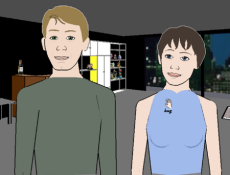
An invitation for drinks becomes an argument almost immediately in Façade. The player visits the New York apartment of Grace and Trip, a married couple who initially try to present themselves as happy and successful. Once the evening begins, however, unresolved problems start appearing in their conversations. Their disagreements involve marriage, careers, communication, past decisions, and the way each partner feels about the other. The player is not simply watching the argument but becomes a third participant who can influence where the conversation goes.



Facade
Advertisement
Advertisement









An invitation for drinks becomes an argument almost immediately in Façade. The player visits the New York apartment of Grace and Trip, a married couple who initially try to present themselves as happy and successful. Once the evening begins, however, unresolved problems start appearing in their conversations. Their disagreements involve marriage, careers, communication, past decisions, and the way each partner feels about the other. The player is not simply watching the argument but becomes a third participant who can influence where the conversation goes.
A Conversation Without Fixed Dialogue Choices
Instead of selecting responses from a prepared list, players type sentences in plain English. Grace and Trip interpret the text and respond according to the current subject, their mood, and what has already happened during the evening. The player can agree with someone, disagree, criticize, compliment, ask questions, change the subject, or refer to objects around the apartment. The same type of comment can receive a different reaction depending on when it is used.
Taking Sides or Making Things Worse
As the argument develops, Grace and Trip repeatedly involve the player in their problems. Supporting one partner may anger the other, while pushing them to discuss uncomfortable subjects can expose information they were avoiding. The player can also behave rudely or disrupt the conversation enough for Trip to end the visit early.
Possible actions and outcomes include:
- supporting Grace or Trip during arguments;
- asking questions about their marriage;
- criticizing or complimenting either character;
- encouraging them to discuss hidden problems;
- leaving the apartment voluntarily;
- being thrown out for offensive or disruptive behavior;
- influencing whether the couple separates or reconciles.
Some conversations can eventually lead to personal confessions. Grace or Trip may reveal secrets about themselves, their relationship, or decisions they made in the past. These admissions affect the final stage of the argument and can cause one partner to leave, help them recognize that they still want to remain together, or result in very little changing between them.
Different Conversations, Different Endings
Façade has no combat, character upgrades, or conventional levels. A complete playthrough is one evening inside the apartment, with progression determined entirely by conversation and interaction. The scenario is designed to change between attempts, including which subjects become important and how the couple reacts to the player. Replaying with different questions, accusations, or supportive responses can therefore produce new confessions and endings, making the central challenge less about finding one correct solution and more about discovering how much the player can change Grace and Trip’s relationship.
Comments (0)


2026
