
























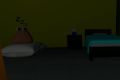





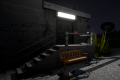

Ordinary scenes can hide disturbing secrets in Something Is Strange, a horror puzzle game focused on observation and logical thinking. Players examine illustrated situations and search for details that do not belong. A familiar room, an everyday conversation, or a seemingly harmless encounter may contain something unsettling. The objective is to identify the abnormal element before advancing to another mystery. Instead of relying on combat or exploration, the game challenges players to notice small visual clues and recognize what makes each situation unusual.



Something Is Strange Game
Advertisement

Advertisement








Ordinary scenes can hide disturbing secrets in Something Is Strange, a horror puzzle game focused on observation and logical thinking. Players examine illustrated situations and search for details that do not belong. A familiar room, an everyday conversation, or a seemingly harmless encounter may contain something unsettling. The objective is to identify the abnormal element before advancing to another mystery. Instead of relying on combat or exploration, the game challenges players to notice small visual clues and recognize what makes each situation unusual.
Finding Hidden Horrors in Everyday Scenes
Each puzzle presents a separate illustration containing a suspicious detail. Players must study the characters, objects, and surrounding environment to determine what is wrong. Some abnormalities are immediately noticeable, while others require examining the entire picture. The illustrations combine ordinary situations with horror elements, creating mysteries that gradually reveal disturbing circumstances. There is no single protagonist traveling through a continuous storyline.
Puzzle Mechanics and Player Interaction
Something Is Strange uses a simple point-and-click system. Players examine the displayed illustration and select the area that appears abnormal. A correct answer allows them to continue to the next puzzle.
The main gameplay activities include:
- Examining illustrations for unusual details.
- Identifying suspicious objects and characters.
- Searching for clues hidden in ordinary settings.
- Selecting abnormalities directly in the picture.
- Solving individual horror-themed mysteries.
- Advancing through increasingly unfamiliar situations.
The controls require no complicated combinations or movement commands. However, successfully solving a puzzle depends on careful observation. Players must compare visual elements, question unusual character behavior, and recognize details that contradict the surrounding scene.
Completing Mysteries and Unlocking New Scenes
Progression in Something Is Strange follows a sequence of illustrated puzzles rather than traditional action levels. Each correctly identified abnormality unlocks another situation to investigate. The challenges emphasize attention to detail instead of reaction speed or character upgrades. Some illustrations reveal their unsettling meaning only after the correct answer is discovered. There are no weapons, boss battles, or equipment systems. The main goal is to solve the available mysteries by discovering the hidden horrors concealed within apparently normal scenes.
Comments (0)


2026
