



















Soroban is a number puzzle built around the Japanese abacus. Instead of typing an answer into a calculator, the player moves beads on individual rods until the abacus represents the required number. There is no story, character progression, or traditional level campaign. The challenge comes from learning what each bead is worth, understanding place value, and becoming fast enough to build numbers correctly without having to stop and calculate every movement.



Soroban
Advertisement
Advertisement










Soroban is a number puzzle built around the Japanese abacus. Instead of typing an answer into a calculator, the player moves beads on individual rods until the abacus represents the required number. There is no story, character progression, or traditional level campaign. The challenge comes from learning what each bead is worth, understanding place value, and becoming fast enough to build numbers correctly without having to stop and calculate every movement.
Learn How the Beads Work
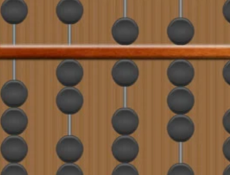
Each vertical rod represents one digit position. The four lower beads are worth one each, while the single upper bead is worth five. Only beads moved toward the central bar count toward the displayed value. Columns work like normal decimal places, so moving to the left changes ones into tens, hundreds, thousands, and larger values. Once the player understands this structure, even large numbers can be created by combining several rods.
Match the Number on Screen
The main challenge mode generates a random number and asks the player to reproduce it on the virtual soroban. The beads can be moved directly, making each puzzle a practical test of number recognition rather than a multiple-choice question. A free-play option also allows players to move beads without a target and immediately see what value their current arrangement represents.
The basic activities include:
- moving upper and lower beads;
- building single-digit values;
- working with tens and hundreds;
- reproducing randomly generated numbers;
- checking the value currently shown;
- resetting the abacus for another attempt.
There are no enemies, timers, or complicated control combinations. Difficulty increases naturally as the numbers become larger and require more columns to be adjusted correctly.
Improve Speed and Number Recognition
Soroban is less about completing a fixed set of stages and more about becoming faster at reading and creating numbers. Beginners can start by experimenting with one rod at a time, while more confident players can generate random values and try to reproduce them without hesitation.
The main progression therefore happens through familiarity with the abacus itself. At first, players may need to count individual beads, but repeated practice makes the patterns for numbers easier to recognize. The complete gameplay loop stays simple: generate a value, move the correct beads, check the result, reset the board, and repeat with another number.
Comments (0)


2026
