



















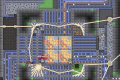
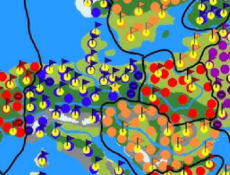
War of Dots reduces large-scale warfare to a map of cities, territory, and moving units, making every decision about positioning and supply important. There is no character-based story or campaign narrative. Instead, each match is a real-time strategy battle where the player expands across the map, captures cities, creates new troops, and tries to break the opponent’s economy. Victory comes from controlling enough territory and taking the enemy capital rather than simply destroying every unit.



War of Dots
Advertisement
Advertisement





War of Dots reduces large-scale warfare to a map of cities, territory, and moving units, making every decision about positioning and supply important. There is no character-based story or campaign narrative. Instead, each match is a real-time strategy battle where the player expands across the map, captures cities, creates new troops, and tries to break the opponent’s economy. Victory comes from controlling enough territory and taking the enemy capital rather than simply destroying every unit.
Cities Control the War
Cities are the foundation of every army. They generate resources, produce units, and keep nearby forces supplied. A city can support up to five units, so creating too many troops without expanding can cause excess forces to starve. Capturing another city therefore has two effects at once: it strengthens the player’s economy while reducing the opponent’s ability to replace losses. Cutting enemy groups away from their cities can also weaken them without requiring a direct attack.
Light and Heavy Units
The army is divided into only two main unit types, but they serve different purposes. Light units are cheaper, faster, and more flexible across varied terrain. Heavy units have more health and damage but move slowly and perform best in open areas. Choosing where to send each type is often more important than simply producing the largest army.
During a battle, players can:
- capture neutral and enemy cities;
- move groups of units between positions;
- produce light or heavy troops;
- protect important supply centers;
- surround and isolate enemy forces;
- use terrain to slow or weaken opponents;
- push toward the enemy capital when defenses become vulnerable.
Terrain and Match Strategy
The battlefield contains different terrain types that affect movement and combat. Plains allow normal movement, while forests, hills, sand, mud, snow, and water can reduce speed or combat effectiveness. Mountains cannot be crossed at all, which can force armies into narrow routes and make certain cities easier to defend. Units that remain in water can eventually convert into ships, opening additional movement options but also exposing them to significant risk.
War of Dots does not use traditional numbered levels as its main progression system. Instead, the challenge comes from individual matches, ranked or casual battles, team games, and custom scenarios. A map editor allows players to create their own battlefields, while replays make it possible to review completed matches and see how both sides moved. The main skill is learning when to expand, when to defend, and when to commit units to an attack. A poorly timed offensive can leave cities exposed, while careful control of supply and territory can defeat a larger army without constant fighting.
Comments (0)


2026
