























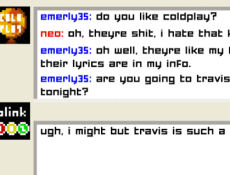
A computer chat window carries almost the entire story in Emily Is Away. The player creates a screen name and talks with Emily, a high school friend, through an interface modeled after early instant messaging. There is no exploration, combat, inventory, or physical movement. Instead, the game focuses on conversations, changing relationships, and the consequences of choosing what to say. The story spans five chapters across five years, following the two characters as their lives and connection gradually change.



Emily Is Away
Advertisement
Advertisement











A computer chat window carries almost the entire story in Emily Is Away. The player creates a screen name and talks with Emily, a high school friend, through an interface modeled after early instant messaging. There is no exploration, combat, inventory, or physical movement. Instead, the game focuses on conversations, changing relationships, and the consequences of choosing what to say. The story spans five chapters across five years, following the two characters as their lives and connection gradually change.
Conversations and Choices
Each chapter is built around a new online conversation. Emily talks about school, friends, relationships, college, and personal problems, while the player selects from several possible responses. After choosing an option, the character types it out before sending the message. The wording can change slightly as it is typed, which sometimes makes the final message feel less direct than the original choice. Different responses affect the tone of the conversation and how close or distant the two characters become.
Main Gameplay Elements
The game revolves around a small set of systems:
- choosing dialogue responses;
- creating a screen name;
- selecting buddy icons;
- reading Emily’s profile and away messages;
- changing text color and profile details;
- moving through five story chapters;
- seeing how earlier choices affect later conversations.
There are no conventional levels with enemies or objectives. Each chapter represents another point in the characters’ lives, so progression happens through time rather than through maps or missions.
Relationship and Story Progression
The central story follows the changing relationship between the player character and Emily. Early conversations can be friendly, flirtatious, or more distant depending on the selected responses. Later chapters reflect previous choices and changes in both characters’ lives, including new relationships, college experiences, and unresolved feelings. The branching structure allows conversations to develop differently, although the overall story still follows the same five-year framework.
Playing Emily Is Away mainly requires reading carefully and deciding how the protagonist should respond. There are no reflex challenges or puzzles, so the main difficulty comes from judging what a message might mean and considering how a reply could affect the relationship. Small choices can change later dialogue, profile details, and the emotional tone of future chapters. Reaching the end means completing all five conversations and seeing how the relationship between Emily and the player has developed over those years.
Comments (0)


2026
