



















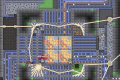

Lazy River places a group of survivors inside Water Station One, where a contaminated water supply has turned most visitors into zombies. The player’s main goal is to stay alive long enough to move deeper through the waterpark and eventually find a way out. Progress depends on building and maintaining a raft, collecting supplies, fighting infected enemies, and dealing with automated security systems. The game does not follow a traditional chapter-based story, so most of the experience comes from surviving each new section of the river.



Lazy River
Advertisement
Advertisement







Raft Construction and Movement
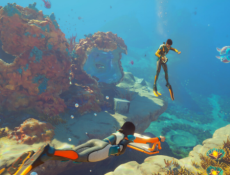
The raft begins as a small collection of inner tubes and can be expanded as more materials are found. Players can add walls for protection, attach engines or sails, and install equipment needed for longer runs. Because the raft follows physics, placement matters. Adding too much weight to one side can make steering harder, while a larger raft provides more space for equipment and supplies.
Enemies and Survival Tools
The river and surrounding areas contain several dangers, and players need different tools for each situation. Important mechanics include:
- collecting parts for new raft sections;
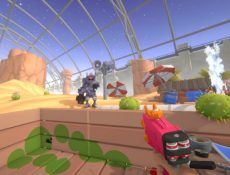
- using squirt guns against zombies;
- throwing water balloons during combat;
- upgrading weapons for better range or fire rate;
- fighting robot security units;
- gathering food ingredients;
- cooking meals on a grill;
- repairing or replacing damaged raft parts.
Zombies are vulnerable to water, making water-based weapons the main way to deal with them. Security robots behave differently and can damage both players and the raft, so some encounters require careful positioning or avoiding direct combat.
Food, Hazards, and Progression
Survival also depends on gathering ingredients and preparing food. Meals such as burgers, corn dogs, onion rings, and tater tots can be cooked during the journey, giving players another reason to search buildings and side areas instead of staying on the river at all times.
Lazy River uses procedurally generated sections instead of fixed numbered levels. This means routes, hazards, enemies, and useful locations can appear in different arrangements during each run. The park’s self-cleaning system can create additional pressure by forcing the group to keep moving. To progress, players need to balance exploration with speed, improve the raft without making it difficult to control, and keep enough food and combat supplies available for the next part of the river.
Comments (0)


2026
