























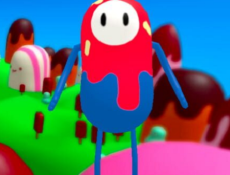
Reaching the finish line before the crowd is eliminated is the main goal in LOLBeans.io. Players control small bean-shaped characters through multiplayer obstacle courses filled with moving platforms, rotating barriers, narrow passages, jumps, and other hazards. There is no story campaign or character-driven plot. Matches are built around short competitive rounds, and slower players are removed until only one winner remains.



LOLBeans
Advertisement
Advertisement










Reaching the finish line before the crowd is eliminated is the main goal in LOLBeans.io. Players control small bean-shaped characters through multiplayer obstacle courses filled with moving platforms, rotating barriers, narrow passages, jumps, and other hazards. There is no story campaign or character-driven plot. Matches are built around short competitive rounds, and slower players are removed until only one winner remains.
Battle Royale Rounds
The standard Battle Royale mode supports up to 30 players and is divided into three rounds. Everyone starts on the same obstacle course and races toward the finish, but only the faster players qualify for the next map. Those who arrive too late are eliminated. The final round leaves a smaller group competing for first place, so surviving each stage is just as important as finishing quickly.
Obstacles, Modes, and Controls
The game includes several ways to play:
- Battle Royale with elimination rounds;
- Tag matches for up to eight players;
- Community-made levels;
- Timed Race courses focused on records;
- Competitive Race levels with rounds;
- Elimination maps with no respawn;
- Sandbox levels without a time limit;
- private party rooms for playing with friends.
Movement uses WASD or the arrow keys, while Space or right-click makes the bean jump. Gamepads are also supported, using one stick for movement, another for the camera, and a button for jumping.
Community Levels and Progression
LOLBeans.io does not use traditional numbered levels. Instead, players move between official maps and community-created courses with different layouts and rules. The level editor allows users to create their own obstacle courses using moving objects, checkpoints, gravity blocks, teleports, jump pads, dynamic objects, and other building elements. Finished levels can be saved, tested, and submitted for other players to try.
Improving in LOLBeans.io mostly means learning how each obstacle behaves and choosing safer routes through crowded sections. Jumping too early can send the bean into a moving barrier, while waiting too long can cost a qualifying position. Other players can also affect movement simply by colliding with each other, making busy platforms harder to cross. Repeated matches help with timing, route selection, and recognizing when it is better to slow down instead of rushing into an obstacle with the rest of the group.
Comments (0)


2026
