



















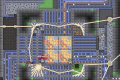

Neanderthal is a historical strategy game for one to three players set in Europe during the last glacial maximum, approximately 45,000 to 35,000 years ago. Each participant controls Archaic Humans, Neanderthals, or Cro-Magnons and attempts to preserve their population while developing its culture. There is no scripted storyline with fixed characters. Instead, the narrative emerges from hunting, climate changes, competition, intermarriage, inventions, and the possible extinction of human groups.


Neanderthal Game
Advertisement
Advertisement






Neanderthal is a historical strategy game for one to three players set in Europe during the last glacial maximum, approximately 45,000 to 35,000 years ago. Each participant controls Archaic Humans, Neanderthals, or Cro-Magnons and attempts to preserve their population while developing its culture. There is no scripted storyline with fixed characters. Instead, the narrative emerges from hunting, climate changes, competition, intermarriage, inventions, and the possible extinction of human groups.
Three Human Species in Ice Age Europe
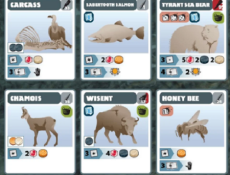
Players begin with tribespeople, a selected social structure, a basic vocabulary, and limited cultural development. During the game, population pieces can be assigned as hunters, elders, husbands, or leaders. The available animal and terrain cards represent northern and southern European biomes. Changing temperatures can move, replace, or remove these cards, reducing the number of locations where tribes can gather resources and hunt.
Six Phases Shape Every Generation
Each turn represents many generations and begins by revealing an event and daughter card. Events may cause cooling, warming, chaos, or other changes affecting every species. Players then assign their people to biomes, courtships, and specialist roles. Hunters belonging to different groups may negotiate, withdraw, or fight before dice are rolled to determine whether expeditions produce food, children, vocabulary, trophies, or useful animals.
A complete turn includes:
- Revealing an event and auctioning a daughter card
- Assigning hunters, suitors, and potential elders
- Negotiating over contested hunting areas
- Resolving attacks and gathering
- Rolling dice for hunting expeditions
- Receiving benefits from domesticated animals
- Performing a vocabulary, portal, or elder action
Cultural Development Instead of Levels
Neanderthal does not contain numbered levels or a linear campaign. Progress is represented by turns, population growth, mature character cards, mental portals, and the transition from vocal communication to tribal culture. Players develop technical, natural, and social knowledge by moving vocabulary disks onto a brain map. Completing enough connections allows a species to become linguistically advanced, unlock elder actions, create inventions, and domesticate animals.
Comments (0)


2026
