
















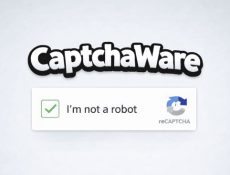
CaptchaWare turns ordinary internet verification into a sequence of rapid mini-games where hesitation can end the run. Instead of solving one CAPTCHA and moving on, the player receives a constant stream of short tasks that require quick reading, accurate clicks, and fast reactions. There is no story campaign or character progression. The entire experience is built around surviving as many challenges as possible and increasing the score before a mistake stops the attempt.



CaptchaWare
Advertisement
Advertisement









One Task After Another
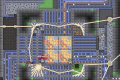
Every CAPTCHA uses a slightly different rule. One challenge may ask the player to identify specific objects in a grid, while the next can require typing, solving a simple equation, moving a slider, or reacting to an unexpected prompt. The instructions change rapidly, so recognizing what the game wants is often as important as performing the action itself.
Challenges can involve:
- selecting correct images;
- typing short answers;
- solving quick math problems;
- dragging sliders into position;
- closing unwanted pop-ups;
- responding to unusual questions;
- reading instructions under time pressure;
- using both mouse and keyboard;
- continuing a run without making a mistake.
Speed Changes Everything
The tasks themselves are usually simple when viewed individually, but CaptchaWare makes them difficult by placing them in quick succession. There is little time to stop and analyze each screen. Players need to understand the instruction almost immediately and perform the correct action before moving straight into another challenge.
Some mini-games also deliberately imitate awkward or confusing verification systems, so assumptions based on previous tasks can lead to mistakes.
Chasing a Higher Score
The score provides the main reason to replay. A failed attempt can be restarted quickly, allowing players to learn recurring tasks and respond faster the next time. The creator’s score of 77 acts as a built-in target for players who want something specific to beat.
CaptchaWare is therefore less about solving complicated puzzles and more about maintaining concentration across many tiny ones. Each run becomes a test of reading speed, reflexes, memory, and accuracy as familiar CAPTCHA ideas are repeatedly changed into increasingly unpredictable challenges.
Comments (0)


2026
