


















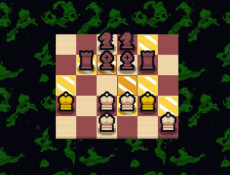
Gambonanza turns chess into a turn-based roguelike built around short battles on small boards. Instead of winning by capturing only the king, the player must remove every enemy piece from the board. Each run is made up of tactical encounters where normal chess movement is combined with upgrades that change the rules. There is no traditional story campaign or sequence of narrative levels; progression comes from clearing boards, earning money, improving the current build, and preparing for boss encounters.



Gambonanza
Advertisement
Advertisement






Gambonanza turns chess into a turn-based roguelike built around short battles on small boards. Instead of winning by capturing only the king, the player must remove every enemy piece from the board. Each run is made up of tactical encounters where normal chess movement is combined with upgrades that change the rules. There is no traditional story campaign or sequence of narrative levels; progression comes from clearing boards, earning money, improving the current build, and preparing for boss encounters.
Chess Pieces and Board Rules
Pieces still use recognizable chess-style movement, but Gambits can change how they behave or interact with other systems. More than 150 Gambits are available, allowing players to build combinations around particular pieces or strategies. The board itself can also be upgraded. Certain tiles can trap enemies, protect pieces, provide bonuses, or turn pieces into sources of money. This means positioning depends not only on where pieces can move, but also on what individual spaces do.
Building a Run
Money earned during a run can be invested in pieces, Gambits, and board improvements. Extra pieces do not always need to be placed immediately because the reserve system allows them to be stored off-board and deployed later. Players therefore have to decide which pieces belong on the board, which should remain in reserve, and when bringing in another unit will create an advantage.
The main activities include:
- moving pieces according to their available movement rules;
- capturing every opposing piece to clear a board;
- choosing Gambits that modify the current strategy;
- upgrading individual board tiles;
- keeping additional pieces in reserve;
- deploying reserve pieces during important situations;
- spending winnings between encounters;
- fighting boss opponents with special challenges.
Another restriction comes from the board itself. Taking too many moves can cause parts of it to crumble, reducing the safe space available for pieces. This puts pressure on the player to clear enemies efficiently instead of moving indefinitely. Between tactical encounters, mini-games inspired by pachinko, slot machines, and Gachapon can provide additional upgrades that affect the rest of the run.
Bosses and Progress
Runs eventually lead to boss battles that test the combinations created earlier. There are no traditional character levels based on experience points; strength comes from the pieces, Gambits, tile effects, reserve choices, and upgrades collected during the run. Losing means starting another run and building a different combination. Playing effectively requires planning several moves ahead, using available board space carefully, and creating interactions between pieces and rule-changing upgrades rather than relying only on standard chess tactics.
Comments (0)


2026
