

























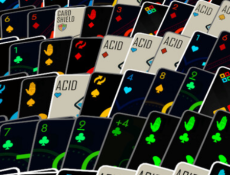
Cheater’s Table is a social card game for two to four players where getting rid of your hand is only part of the objective. Matches combine color-and-number card rules with bluffing, hidden cards, traps, and punishments that can remove lives from the players at the table. A normal turn may involve matching the current card, but the game also allows players to secretly hide cards in their sleeve or pant leg and use them later. The challenge is deciding when someone is genuinely cheating and when their suspicious behavior is deliberately trying to provoke an accusation.



Card Game Cheaters Table Steam Pr
Advertisement
Advertisement











Cheater’s Table is a social card game for two to four players where getting rid of your hand is only part of the objective. Matches combine color-and-number card rules with bluffing, hidden cards, traps, and punishments that can remove lives from the players at the table. A normal turn may involve matching the current card, but the game also allows players to secretly hide cards in their sleeve or pant leg and use them later. The challenge is deciding when someone is genuinely cheating and when their suspicious behavior is deliberately trying to provoke an accusation.
Cheating Can Be More Dangerous Than Playing Fair
Cheating becomes available after the opening turns. A player can hide an unsuitable or powerful card and attempt to place it without being caught. Other players can challenge suspicious actions. If the accusation is correct, the cheater receives the punishment. If the accusation is wrong, the challenger can suffer instead. This creates a second layer of play where watching opponents and bluffing are as important as managing the cards in your own hand.
Traps complicate accusations even further. A player can deliberately make an action look suspicious and set a trap. Challenging the trap causes its penalties to hit the accuser, while refusing to challenge can make the trap backfire on the person who placed it.
Special Cards and Punishments
The deck contains several effects that can completely change a round:
- Color Change selects a new active color.
- Reverse changes the turn direction.
- Stop skips the next player.
- Paint Can converts cards in a hand to one color.
- Swap exchanges one player’s hand with another.
- Gift sends red dynamite to an opponent.
- Pass All Dynamite moves active dynamites to another player.
- Cadillac introduces another dangerous table punishment.
- Milk is the final card and can immediately decide the match.
The Milk card is particularly important. Successfully playing it can end the match immediately. If nobody manages to do so, victory instead goes to the last surviving player.
Different Ways to Control the Table
Cheater’s Table includes several rule sets rather than one fixed format. Old School removes cheating for a cleaner card match, while Lab Mode allows rules such as lives, punishments, traps, and other match settings to be adjusted. Tournament Mode organizes longer competition, and Solo Mode allows the same systems to be played against bots.
Because lives, dynamite, cards, accusations, and traps can all interact, a player with a strong hand can still lose through one bad challenge. Winning consistently requires managing cards while also reading the behavior of everyone else at the table.
Comments (0)


2026
