




















Coyote is a card game for two to six players based on estimation, rising bids, and incomplete information. Its short introductory story describes Coyote losing his belongings while crossing a river and challenging other animals to a game to win their possessions. This story provides context but does not develop into a campaign. A typical session lasts about 20 minutes and uses number cards, special cards, card stands, and Peek cards.



Coyote Card Game
Advertisement
Advertisement









Coyote is a card game for two to six players based on estimation, rising bids, and incomplete information. Its short introductory story describes Coyote losing his belongings while crossing a river and challenging other animals to a game to win their possessions. This story provides context but does not develop into a campaign. A typical session lasts about 20 minutes and uses number cards, special cards, card stands, and Peek cards.
A Number Everyone Can See but You
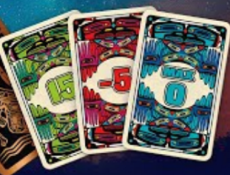
At the beginning of each round, every player draws one card without viewing its front. The card is placed in a stand so that all opponents can see its value while its owner cannot. One additional card is placed face down in the center, making part of the total unknown to everyone. Players must estimate the combined value by examining visible cards and interpreting earlier bids.
Deciding When a Bid Is Too High
The starting player announces a number that should not exceed the total value of all cards in play. Moving clockwise, each participant must either announce a higher number or challenge the previous bid. When someone challenges, every card is revealed and the total is calculated. If the bid is higher than the actual total, the bidder loses; if the bid is equal to or lower than the total, the challenger loses.
The main actions and card effects include:
- Raise the current bid by announcing any higher number.
- Challenge when the previous estimate appears too high.
- Use an open-eye Peek card to inspect the hidden center card.
- Replace the question-mark card with the next card from the deck.
- Change the highest number card to zero when Max 0 appears.
- Bluff by making opponents believe that an unseen card has a different value.
Survival Across Multiple Rounds
Coyote has no conventional levels, maps, missions, or character upgrades. Progress is divided into repeated bidding rounds. Each player begins with three Peek cards, which also represent their remaining chances. The loser of a challenge removes one Peek card, while the winner may turn a closed eye to its open side. A player without any Peek cards is eliminated, and the game continues until only one participant remains.
Effective play requires more than adding the visible numbers. Players should remember which values exist in the deck, consider the unknown center card, and watch how confidently opponents raise the bid. An open-eye card can reveal the center card, but using it forces the player to raise rather than challenge. The optional Trickster variant adds predictions and a Coyote card that can place another hidden value in the center. The final winner is the last player who has not been eliminated.
Comments (0)


2026
