



















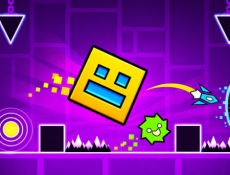
Dashmetry is a rhythm-based platform game where players guide a moving object through obstacle-filled levels synchronized with music and timing-based mechanics. The game focuses on precision, reaction speed, and pattern recognition. Players must navigate increasingly complex stages while avoiding hazards and maintaining control of movement. Success depends on timing actions correctly and adapting to the rhythm of each level.



Dashmetry
Advertisement
Advertisement






Dashmetry is a rhythm-based platform game where players guide a moving object through obstacle-filled levels synchronized with music and timing-based mechanics. The game focuses on precision, reaction speed, and pattern recognition. Players must navigate increasingly complex stages while avoiding hazards and maintaining control of movement. Success depends on timing actions correctly and adapting to the rhythm of each level.
Story and Game Structure
The game does not place a strong emphasis on narrative. Instead, the primary focus is on progression through a series of stages that introduce new mechanics and challenges. Players advance by completing levels and unlocking additional content. The absence of a detailed storyline allows gameplay and skill development to remain the central elements of the experience.
Levels are designed around specific gameplay concepts and obstacle arrangements. Early stages introduce movement mechanics and basic hazards, while later levels require more precise timing and faster reactions. As players progress, they encounter increasingly complex combinations of obstacles that demand greater accuracy and concentration.
Core Gameplay Features
Several mechanics form the foundation of the game:
- Navigate through obstacle-filled levels
- Time movements according to level patterns
- Avoid collisions with hazards
- Complete stages to unlock new challenges
- Improve reaction speed and precision
- Learn obstacle sequences through practice
- Progress through increasingly difficult levels
These systems create a gameplay loop centered on repetition, learning, and gradual improvement.
Levels and Challenges
The game features multiple levels with varying layouts and difficulty settings. Each stage introduces different obstacle arrangements that require players to adjust their strategies. Some levels focus on simple timing challenges, while others combine multiple mechanics that must be mastered simultaneously.
As players advance, levels become longer and contain more complex sequences. Memorizing obstacle patterns can help improve performance, but quick reactions remain essential. Frequent practice allows players to refine their skills and achieve better completion times or higher scores.
How to Play
Players control a moving object and guide it through levels filled with obstacles. The primary objective is to reach the end of each stage without colliding with hazards. Controls are generally simple, but mastering timing and movement requires experience. Every mistake can force players to restart a section or attempt the level again.
Comments (0)


2026
