

























Machine Party treats every minigame as a separate survival test with its own instructions and consequences. A group of two to four participants enters the competition as customizable test subjects. They must complete changing objectives, avoid elimination, and decide how much attention to give the task itself and how much to spend disrupting the other players.



Machine Party
Advertisement

Advertisement










No Conventional Campaign
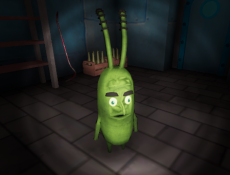
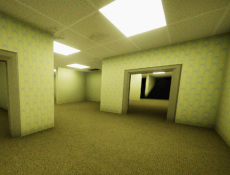
The game has a setting but does not tell a traditional story through missions or cutscenes. Its premise revolves around test subjects taking part in a sequence of dangerous activities controlled by machines. Industrial environments and violent failure scenes establish the circumstances without lengthy explanations. Players can personalize their characters with different outfits and accessories before beginning, although these items do not provide special abilities or affect performance.
Choosing and Completing Minigames
There are 15 minigames, and they replace the usual system of connected levels. Each challenge introduces a specific goal that may involve physical actions, precise timing, tactical decisions, or reading the intentions of another participant. Some activities can be approached individually, while others create situations where temporary cooperation is useful. A group may play the complete sequence or select certain minigames to create a shorter match.
Machine Party includes:
Fifteen independent activities
Sessions for two to four participants
Different rules and controls for each challenge
Full and customized minigame sequences
Cooperation, competition, and betrayal
Several ways to interfere with rival players
Before each round, participants receive the information needed to understand the immediate objective. Once the activity starts, they must react to hazards and monitor what everyone else is doing. An opponent can intentionally block progress, provide misleading information, or abandon an agreement at a critical moment. Because failure can remove a test subject from the current competition, even a simple decision may influence the final result of the session.
Learning to Read the Situation
Machine Party does not use permanent upgrades, skill trees, or equipment progression. Improvement comes from learning the rules of every activity and recognizing common player behavior. Quick reactions are useful in some rounds, but caution and observation may be more important in others. Participants must judge when to act, when to wait, and when another test subject has become a greater threat than the machine itself. Replaying the same selection can still produce a different match because human decisions are not fixed. Alliances may form earlier, sabotage attempts may target a different person, and a previously successful plan may fail when the group changes its response.
Comments (0)


2026
