
































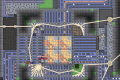

The consequences of a hypothetical collision between Earth and an object from space become visible in Asteroid Launcher. The interactive simulation allows players to define the characteristics of an asteroid and select an impact location on a geographical map. After launching the object, they can examine estimates of the resulting physical effects. The experience is not built around fighting opponents or completing a campaign. Instead, it provides a simplified model for examining how different impact conditions influence crater formation, atmospheric disturbances, and other consequences associated with high-energy collisions.


Asteroid Launcher
Advertisement
Advertisement









The consequences of a hypothetical collision between Earth and an object from space become visible in Asteroid Launcher. The interactive simulation allows players to define the characteristics of an asteroid and select an impact location on a geographical map. After launching the object, they can examine estimates of the resulting physical effects. The experience is not built around fighting opponents or completing a campaign. Instead, it provides a simplified model for examining how different impact conditions influence crater formation, atmospheric disturbances, and other consequences associated with high-energy collisions.
Configuring the Incoming Object
Before beginning a simulation, players choose the composition of the object and adjust its diameter, speed, and impact angle. Each variable represents a different physical characteristic. A larger diameter generally implies a greater volume of material, while a different composition changes its density. Speed is especially significant because kinetic energy increases with the square of velocity. The angle of approach influences the circumstances under which the object enters the atmosphere and encounters the surface. These controls allow visitors to compare hypothetical scenarios without needing to perform the underlying calculations manually.
Examining the Simulation Results
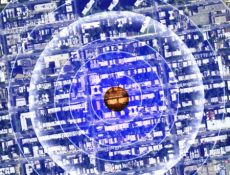
The map and result panels present several categories of estimated impact effects, allowing visitors to investigate their relative scale:
- Crater formation and the area surrounding the impact.
- Thermal effects associated with the released energy.
- Atmospheric pressure disturbances and blast effects.
- Strong winds caused by the impact event.
- Seismic effects generated by the collision.
- Estimated consequences for affected populations.
- Comparisons between different asteroid configurations.
The resulting visualizations provide a broad illustration of how impact effects can extend beyond the immediate point of contact. They are model-based estimates, not a precise forecast of a future disaster. Real events would depend on factors including the object’s structure, atmospheric behavior, local terrain, and uncertainties in the physical models. Visitors should interpret the numerical results within these limitations.
Exploring Different Hypothetical Conditions
Asteroid Launcher is an open-ended educational experiment, so there is no required sequence of levels. Players can clear a scenario, change one variable, and examine how the new configuration affects the displayed results. Comparing one change at a time can help illustrate the relationship between physical parameters and model outputs. The experience combines geography, astronomy, and simplified impact physics in an accessible format. Its principal appeal lies in making an uncommon natural phenomenon easier to visualize while encouraging further investigation of the scientific concepts behind the simulation.
Comments (0)


2026
